


Mosquitoes
Standing water breeds them, shaded vegetation holds them. Seasonal treatment brings the pressure down on a deck or a yard — it does not buy you a mosquito-free summer.
Overview
Mosquitoes are a Manitoba summer fact and the pest behind most cottage and backyard calls. The useful thing to understand is that the mosquitoes bothering you on the deck came from two places: standing water somewhere close by where they bred, and the shaded vegetation where the adults sit out the day.
So the work is two jobs. Source reduction means getting rid of the standing water — blocked eaves troughs, sagging tarps, buckets and wheelbarrows, tire ruts, birdbaths, kids' toys, the saucer under a planter, an unused boat. A container that holds water for a week is a nursery.
The second job is a seasonal barrier treatment of the shaded resting harbourage: the underside of dense shrubs, tall grass, the shaded side of a deck or fence, and the vegetation along the property perimeter. That treatment reduces mosquito pressure in the treated outdoor areas for a period of time, and it needs repeating through the season.
We will be straight with you about this one. Nobody eliminates mosquitoes from an outdoor property. Adults fly in from surrounding land and a rainy week starts a fresh batch. What treatment does is make a deck or a gathering area noticeably more usable for a stretch, and it works far better once the water sources on the property are gone.
How to identify
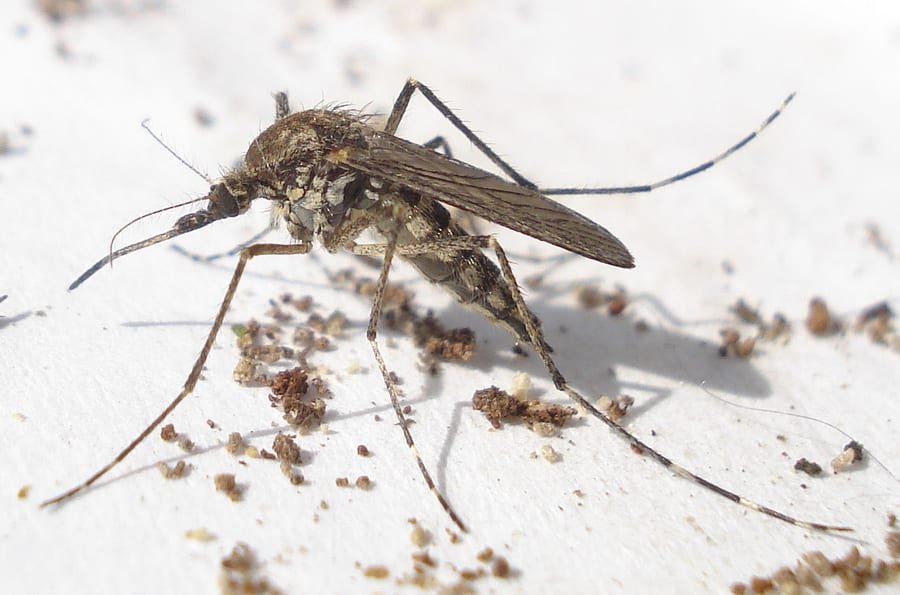
- Slender flies with long legs, narrow wings and a forward-pointing proboscis.
- Only the females bite; they need a blood meal to produce eggs.
- Larvae are the wrigglers hanging just below the surface of still water, diving when the container is disturbed.
- Biting peaks at dusk and dawn for most species here, though a shaded, humid yard sees daytime activity too.
- Midges and crane flies get blamed constantly and do not bite at all.
Fast facts
- Breeding
- Standing water, in as little as a week
- Adults rest
- Shaded vegetation, through the day
- Service
- Seasonal, repeated through the summer
- Honest limit
- Reduced pressure in treated areas, not elimination
Signs to watch for
- Biting pressure that ramps up through the evening around the deck, patio or fire pit.
- Wrigglers in a rain barrel, birdbath, bucket, planter saucer or blocked eaves trough.
- Mosquitoes resting on the shaded side of a fence, a deck skirt or a dense shrub in the middle of the day.
- A clear jump in numbers four to seven days after heavy rain.
Why it matters
- Bites, lost sleep, and outdoor space nobody wants to use.
- Scratched bites can get infected, particularly on children.
- Mosquito-borne illness is uncommon here but not unheard of. Questions about personal risk, repellents or symptoms belong with your doctor or public health, not with us.
- Livestock and pets are bothered too; anything animal-related is a question for your veterinarian.
How we handle it
Our approach
Property inspection and source survey
We walk the property and list every container, low spot, tarp and blocked eaves trough holding water. Why it matters: one neglected container can out-produce everything else on the site, and no treatment keeps up with a breeding source that is still running.
Source reduction
We go through what has to be drained, dumped, tipped, screened or re-graded, and what to check again after rain. Why it matters: this is the part that keeps working between visits, and most of it is a bucket and five minutes rather than a product.
Seasonal barrier treatment of resting harbourage
We treat the shaded vegetation and resting sites where adults wait out the day — under dense shrubs, along fence lines and the shaded perimeter, and around decks, patios and gathering areas. Why it matters: hitting where the adults actually rest is what drops the biting pressure where you sit. Treating open sunny lawn does not, because they are not there.
Repeat through the season
Treatment is repeated through mosquito season on a schedule suited to the property. Why it matters: the effect wears off and adults keep moving in from surrounding land, so this is a maintained seasonal service rather than a single visit.
Realistic expectations, set first
We tell you what treatment can and cannot do before we start rather than after. Why it matters: this work reduces mosquito pressure in the treated outdoor areas for a period of time. It does not clear a property of mosquitoes, and on a bad evening you may still want repellent.
Prevention
Keep them from coming back
- Tip, drain or store anything that holds water: buckets, toys, saucers, wheelbarrows, tarps, unused boats.
- Clear and level eaves troughs so they drain instead of holding a pool.
- Change birdbath and pet water every few days.
- Screen rain barrels and cisterns with fine mesh.
- Fill or re-grade tire ruts and low spots that hold water after rain.
- Thin dense shrubs and keep grass cut so there is less shaded resting habitat beside the deck.
- Keep door and window screens in good repair.
Questions
Mosquitoes questions, answered
Will treatment get rid of the mosquitoes in my yard?
No. It reduces the pressure in the treated outdoor areas for a period of time. Adults fly in from surrounding land and heavy rain starts a new batch nearby, so this is a seasonal, repeated service rather than a permanent fix. Anyone promising you a mosquito-free yard is overselling it.
How often does it need doing?
Through the season, on an interval set to the property and the pressure it carries. Rain, standing water on neighbouring land and how sheltered the yard is all change how fast it needs a refresh. We set the schedule after seeing the site rather than before.
We only use the cottage on weekends. Is it worth doing?
That is the most common version of this job. Treatment is timed so the deck and gathering areas are usable when you are actually there, and the source-reduction list matters more at a property that sits empty, since nobody is there to tip the water out between visits.
Do you spray the whole lawn?
No. Adults do not rest on open, sunny lawn — they sit in shaded vegetation. We treat the resting harbourage: shrub undersides, fence lines, the shaded perimeter and the planting around decks and patios. That is where they are.
What about the standing water in the ditch beside my property?
If it is not on your property we cannot treat it, and we will tell you so rather than pretend otherwise. What we can do is clear everything on your side of the line and set the treatment schedule with that outside pressure in mind.
Get it handled
PESTS DON'T WAIT. NEITHER SHOULD YOU.
Call Central Prairie Pest Control or send the quote form — you'll get a clear price and plan before any work starts.